Files delivered by emailSecure Stripe checkoutYours to keep
Teacher resources
Teacher Resources & Templates
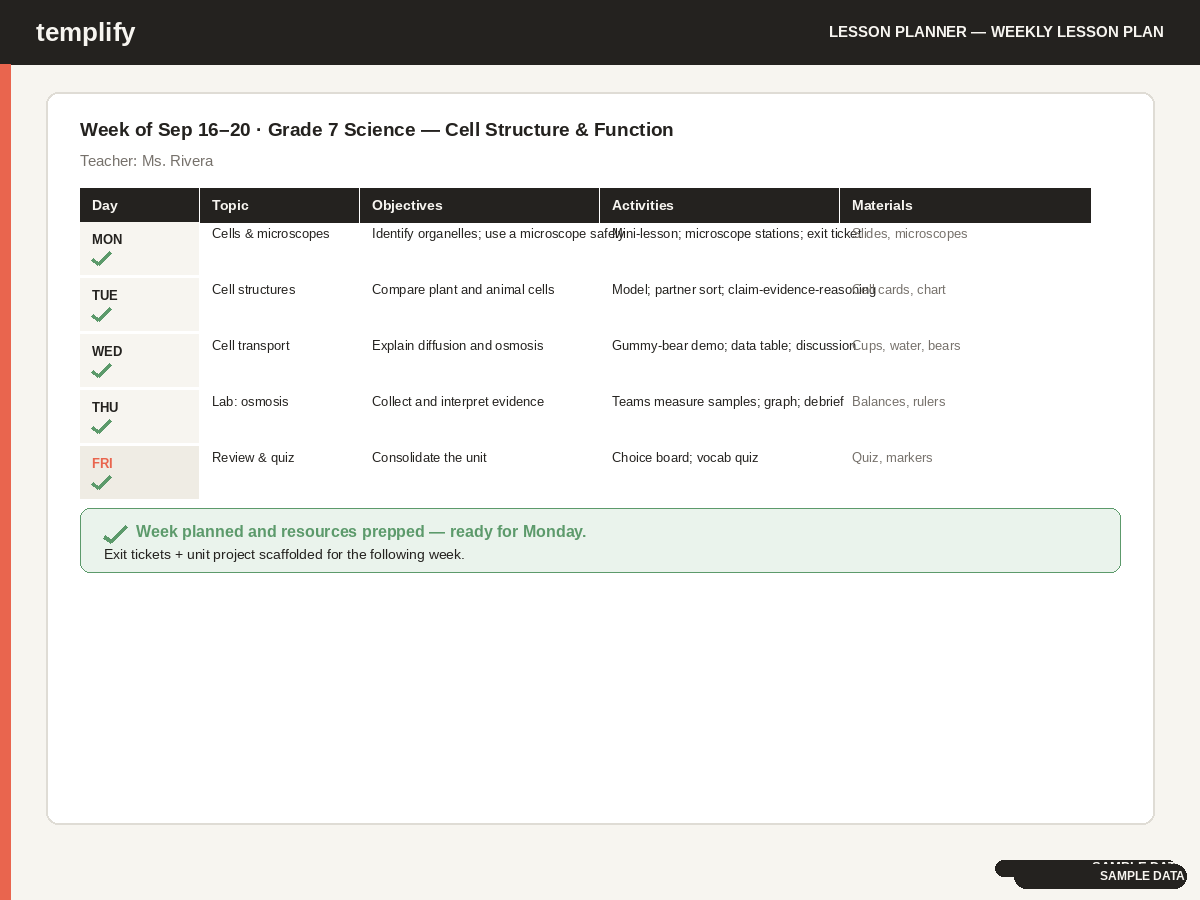
Spend less time on admin and more time teaching. Track every student's progress in the Grade Book and Student Tracker, plan thoughtful lessons with the Lesson Planner, bring order to your classroom with Classroom Organization, and log independent reading in the Reading Log. Homeschooling? The Homeschooling Planner shapes your full year. Want everything at once? The Teacher Ultimate Bundle packs all 24 teacher tools — worth $248 — into a single $29 download.
Teacher Resources
Teacher Ultimate Bundle
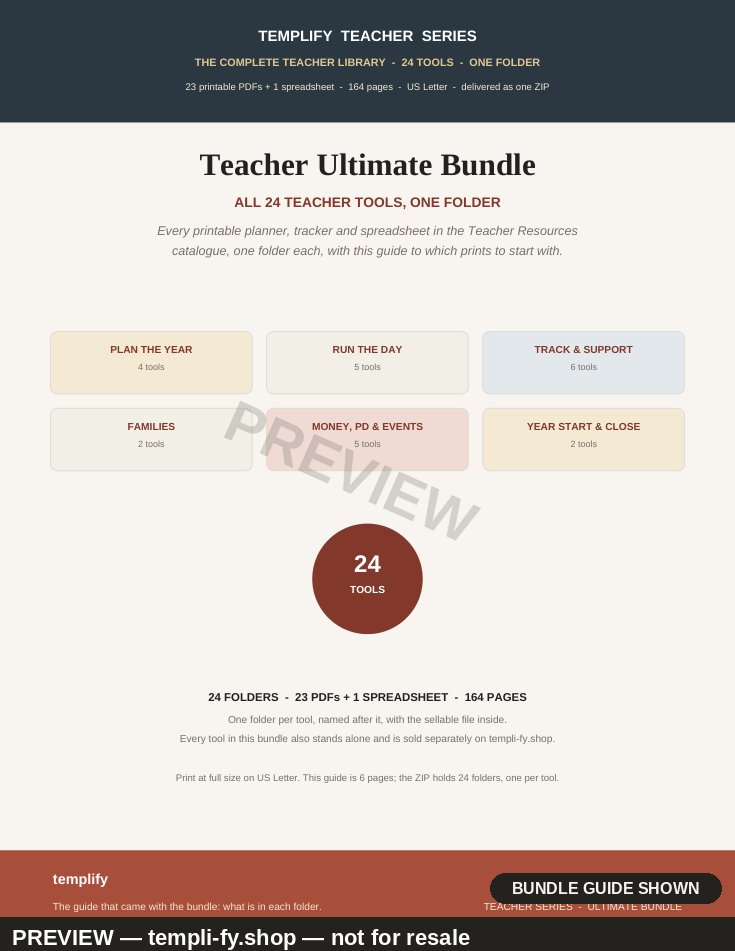
All 24 Teacher Resources tools in one download — the curriculum and lesson planners, the classroom-day set, the student tracking and support records, the parent communication and conference pages, the expense workbook and PD tracker, the field trip and event planners, and the two checklists that open and close the school year — plus a 6-page handoff guide that says what is in each folder and which three or four prints to start with. Each of the 24 is a complete product on its own and is sold separately on this site too, and the files in this bundle are the same files the singles ship rather than cut-down versions. Bought separately the 24 come to $248: $248 value for $29, save $219.
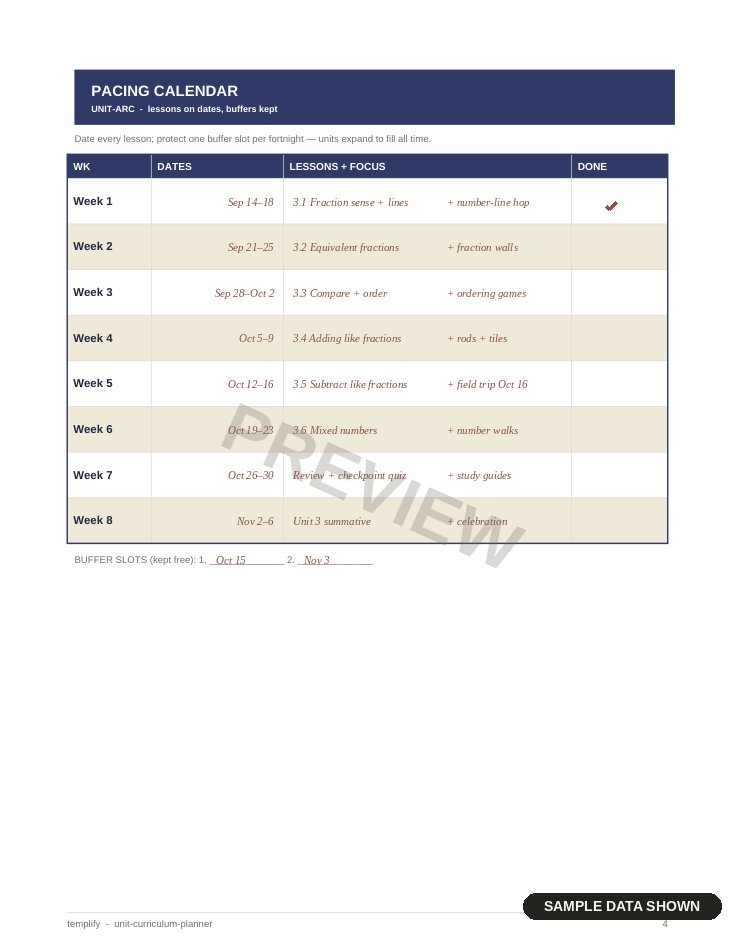
The unit-arc system: deep indigo and cream that plans the unit before the term plans you — vision, standards, pacing, assessments and review in one calm build.
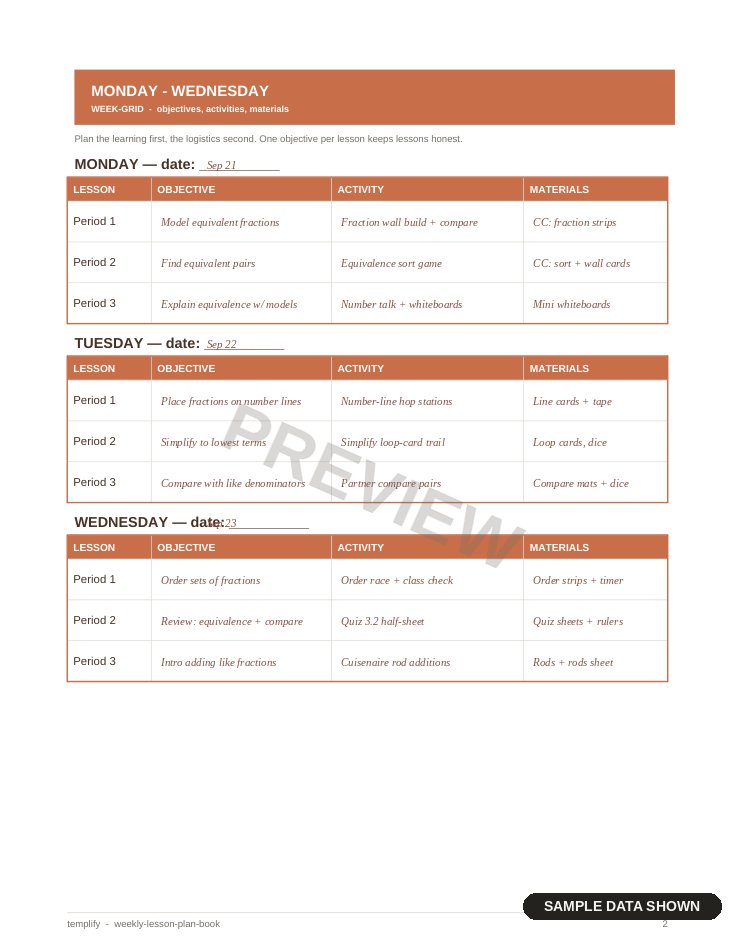
The week-grid system: terracotta and sand with the whole teaching week on two spreads — objectives, activities, materials, homework and reflection in one warm build.
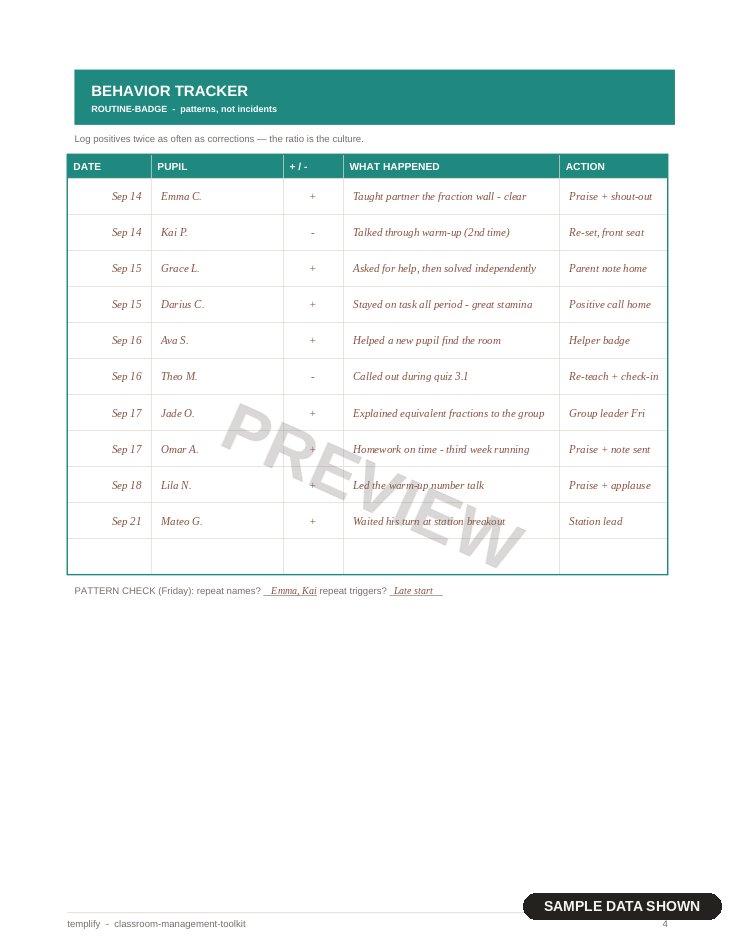
The routine-badge system: teal and coral that teaches routines like lessons — scripted transitions, five posted rules, tracked behavior, real rewards and a parent log in one playful build.
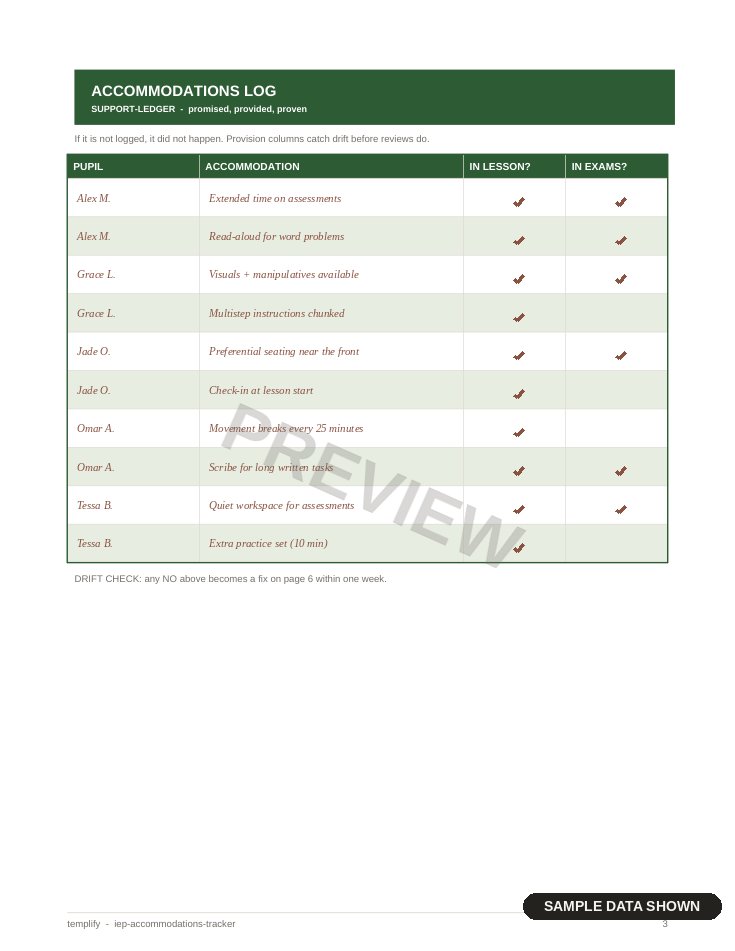
The support-ledger system: forest and sage that keeps every support promised — plan register, provision log, evidenced goals, minuted meetings and term verdicts in one calm build.
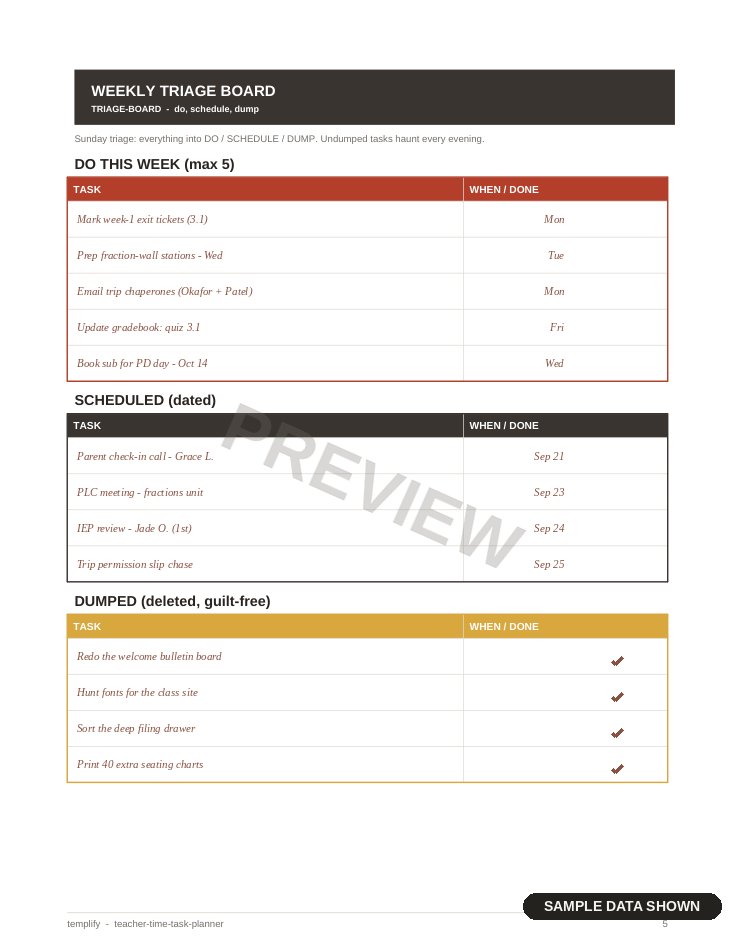
The triage-board system: paprika and charcoal that tames the workload — grading oldest-first, pre-spent prep periods, capped late days and a Sunday triage in one bold build.
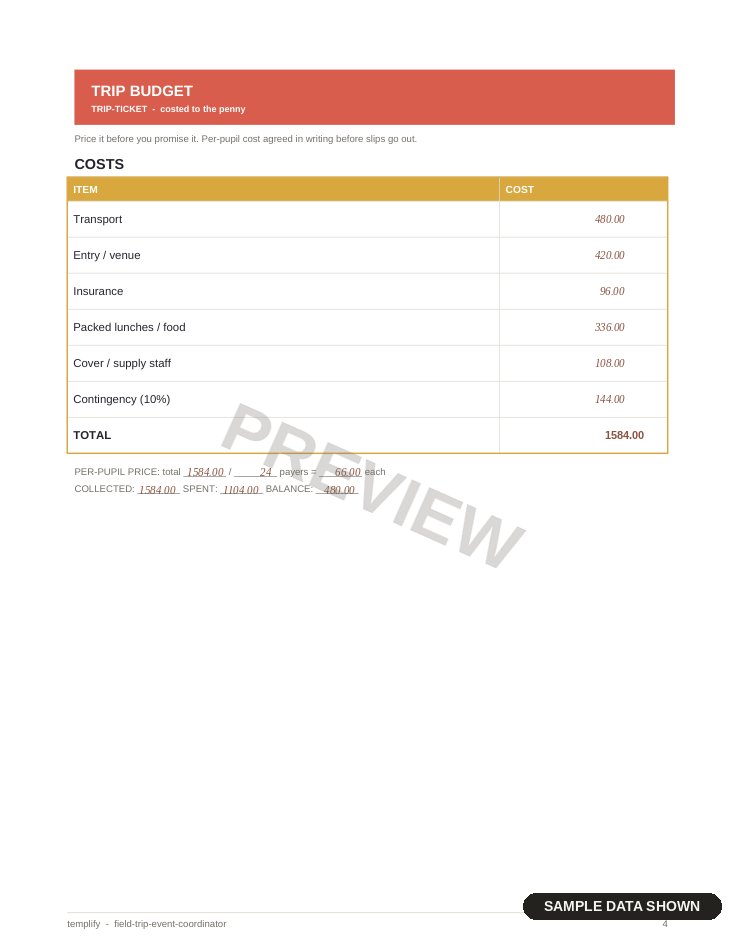
The trip-ticket system: multi-color blocks that account for every slip, seat and sandwich — permissions, chaperones, budget, minute-by-minute itinerary and paper safety contacts in one colorful build.
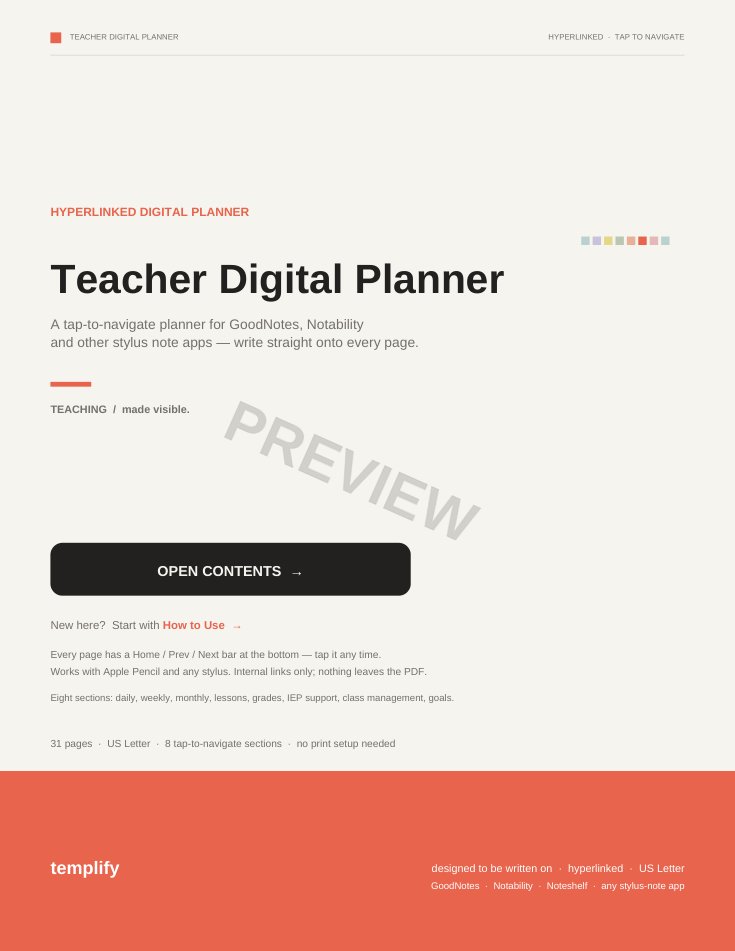
A tap-to-navigate digital planner PDF for GoodNotes, Notability, and similar stylus apps — 31 US Letter pages across eight sections: the teaching day, the week and term, lesson planning, grades & assessment, IEP & accommodations, class management, and goals — with a weekly lesson grid, seating chart and parent contact log. Every page has a Home/Prev/Next tap bar, and the Contents page jumps you anywhere in one tap. Delivered instantly by email as a downloadable PDF.
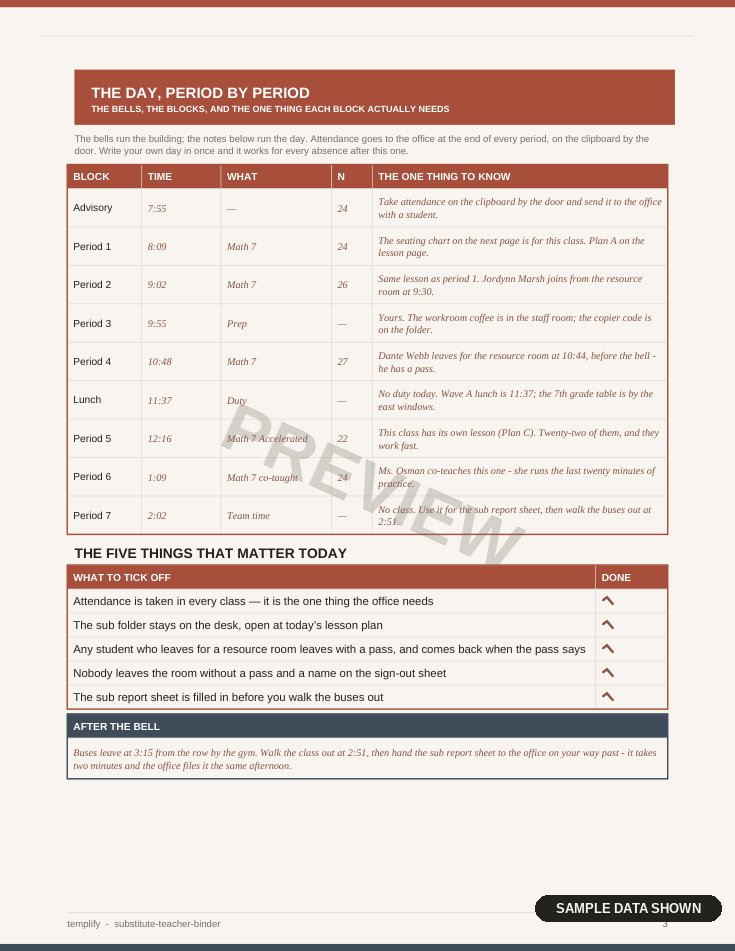
The whole absent day in one ten-page binder, written for the adult standing in front of the class rather than for a filing cabinet: the building in short and who to ask, where the lesson plans and seating chart actually live, the bell schedule period by period with the one thing to know about each block, the seating chart for the largest class with the seats that matter, what to do for a fire alarm, lockdown, earthquake or a hurt student, the lesson plan handed over row by row, the students a substitute should be told about, the day as it happened, and the sub report sheet that goes back to the office. The six Teacher Resources printables are single-purpose working sheets; this is the structure a stranger needs on day one. Printed at home on US Letter; delivered by email as a PDF.
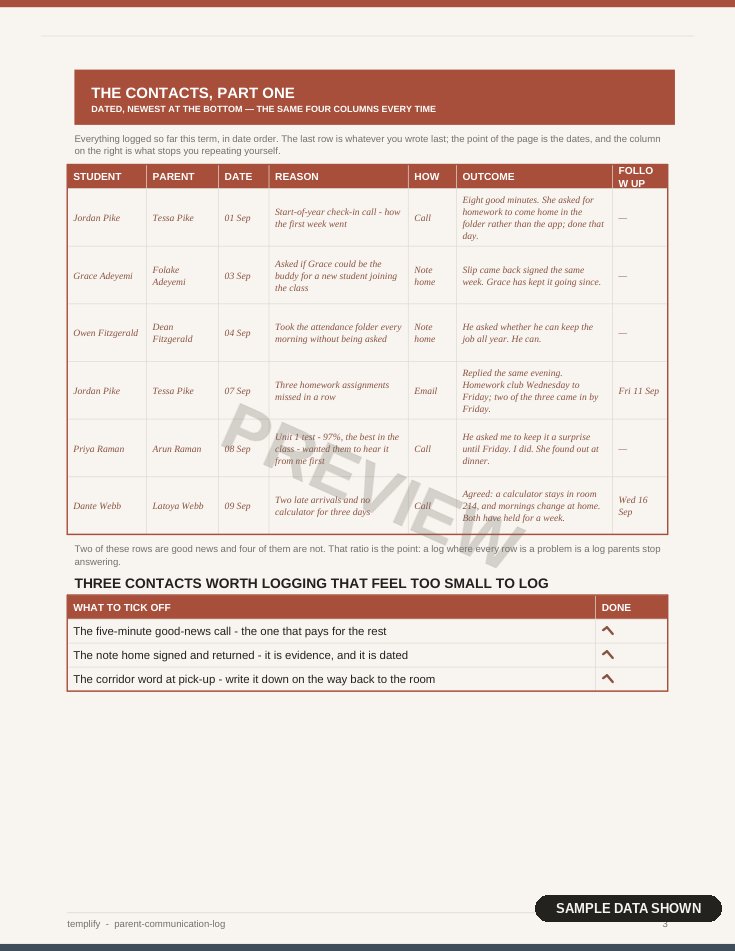
Seven pages that turn "I should probably ring that parent" into a dated record you can still read in June: the five-minute rule and what counts as a contact, two pages of dated entries across student, parent, date, reason, method, outcome and follow-up date, the method key for a call, an email, a note home, an app message or a conversation in the corridor, a quick-contact sheet for the families who come up most, a follow-up tracker where every promise carries the date it was made and the date it is due, and the openings that work on a call or in an email next to the lines that do not. Not a CRM and not the school's system of record - the sheet you write on while it is happening. Printed at home on US Letter; delivered by email as a PDF.
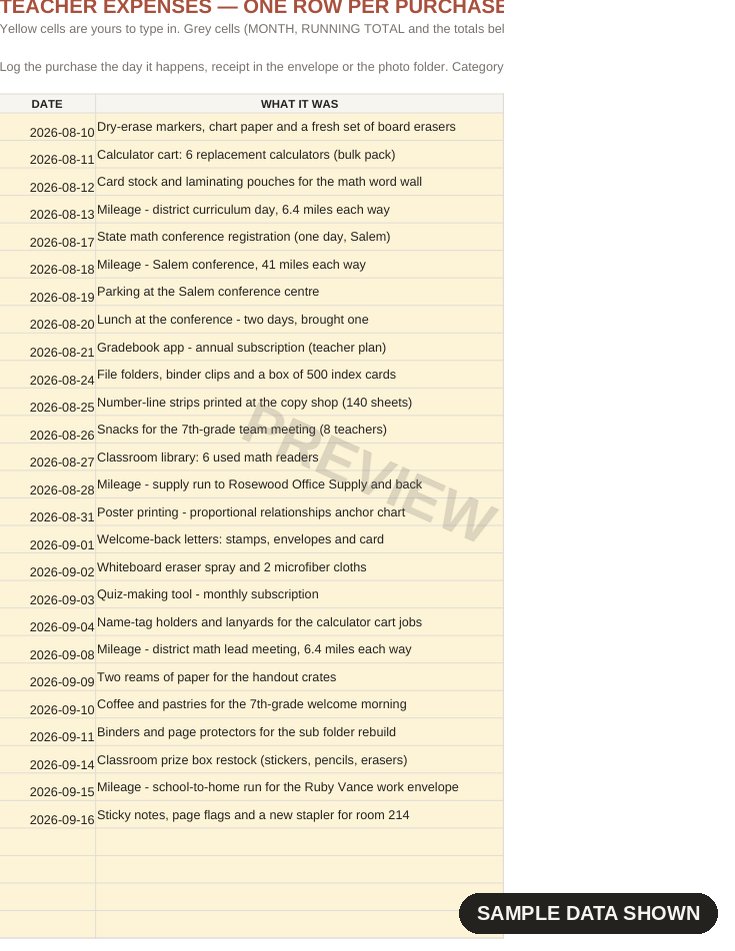
The money a teacher spends on the job, and the money that comes back: five sheets, every number a formula. Log each purchase once across fifty ready rows and the Expenses sheet fills in the month and the running total itself. The Categories sheet holds seven teacher categories - classroom supplies, professional development, mileage and travel, software, meals at events, out-of-pocket and other - and compares spend against the budget you set with SUMIFS, so changing a row's category moves the money with it. A Monthly View sets the month from one cell, the Year Summary totals the year, and the reimbursement tracker follows what you claimed, what you received and what the district still owes. Mileage prices itself at the rate in a single editable cell. No macros: opens in Excel, LibreOffice, Numbers and Google Sheets. Delivered by email as an .xlsx workbook.
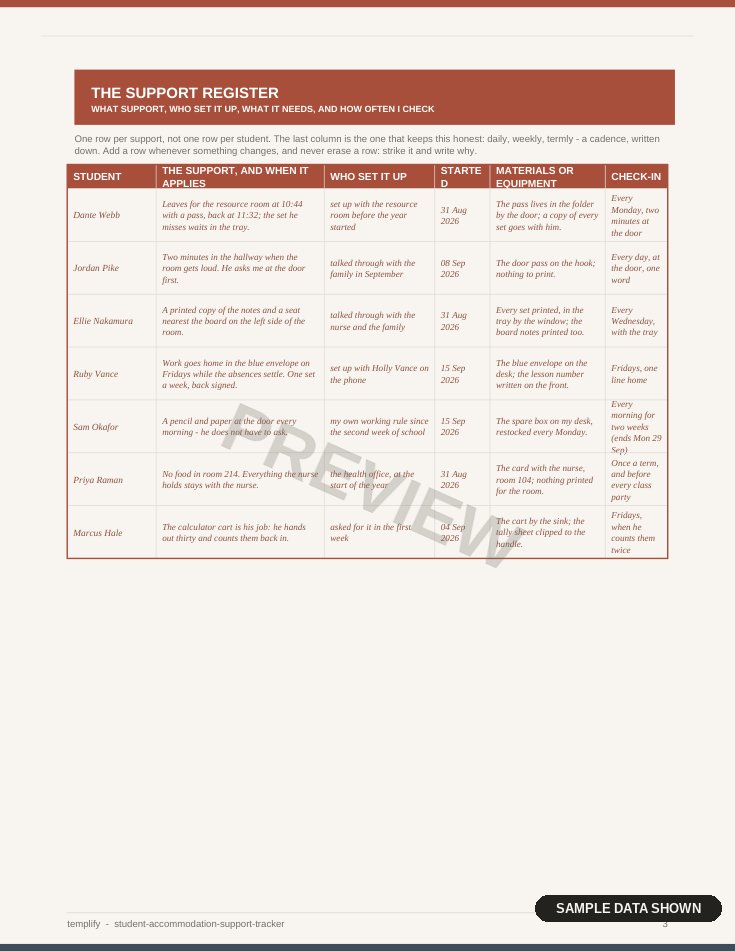
Nine pages for the teacher's side of the support a student receives, and honest on the first page about what it is and what it is not. The support register runs one row per support rather than one row per student - the student, what the support actually is, what it needs to work and who set it up - with a second page of rows to print as you need them. A same-day support log records what actually happened, one line at a time, and the notes-home page holds the conversation behind it. The review tracker and the review calendar keep every next review date in one place, with what you are looking for when you get there, and a quick reference page has who to ask in the building. Not a legal record and not the school's system of record - the working copy that travels with the student's day. Printed at home on US Letter; delivered by email as a PDF.
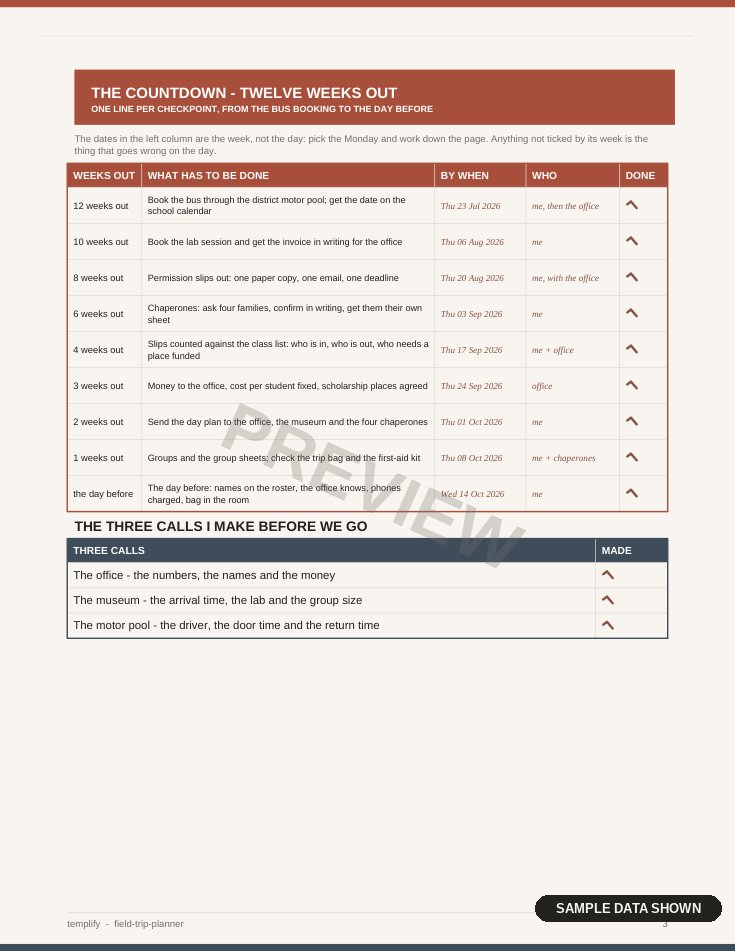
Ten pages for running a school trip properly, from twelve weeks out to the way home. The trip and why we are going opens with the overview in one box, then the countdown works the checkpoints in order - bus booked, lab booked, permission slips, payments. The day runs hour by hour with the float plan: how much slack is in every block and what you do with it when the schedule slips. Groups, chaperones and meeting points put six students with a named adult and a named place at a named time, and the packing list has to come back complete. The student needs sheet is deliberately blank - thirteen lines for the things you know and a stranger does not. If something goes wrong covers the four situations with what you do first and who to call, the money page sets estimate against actual line by line, and the review is filled in on the bus while it is still true. The countdown starts twelve weeks out, not the week before. Printed at home on US Letter; delivered by email as a PDF.
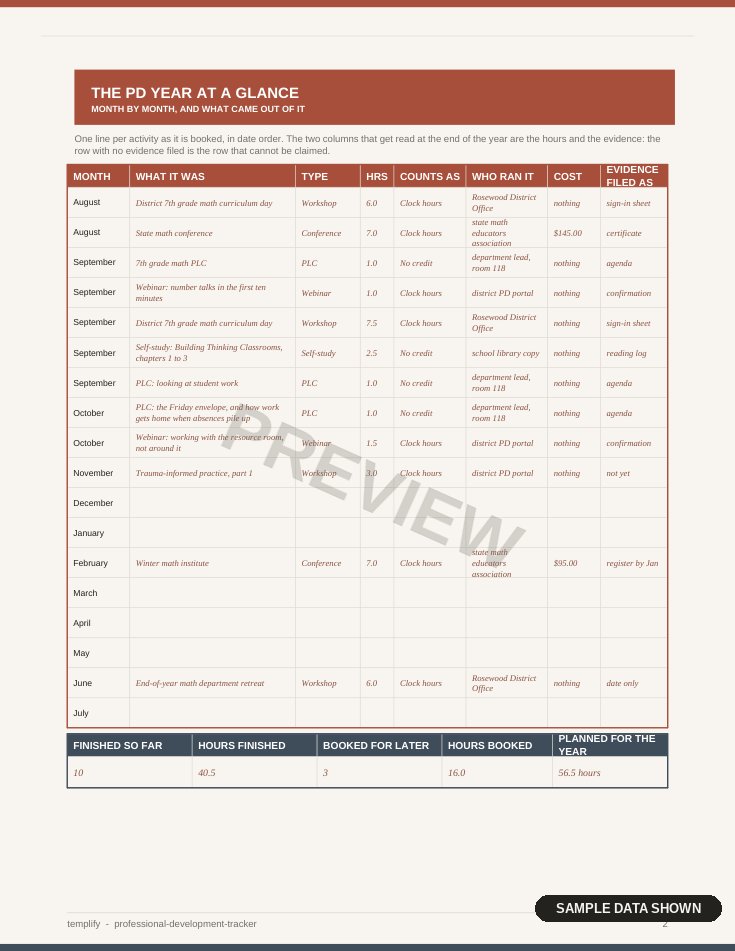
An eight-page record for the professional learning you do all year and forget by June. The PD year at a glance puts one line per activity month by month with the hours and what it counts as; the register holds one row per activity - date, what it was, type, hours, what it counts as, who ran it, what it cost and what proves it - with a second page of rows and the six type codes from workshop to self-study. The hours and category summary shows where the year actually went, the certificates and evidence page tracks one row per piece of paper, and the budget page sets what you planned to spend against what you spent. It closes with a reflection block per activity: what you took and the one thing you will use in class. Printed at home on US Letter; delivered by email as a PDF.
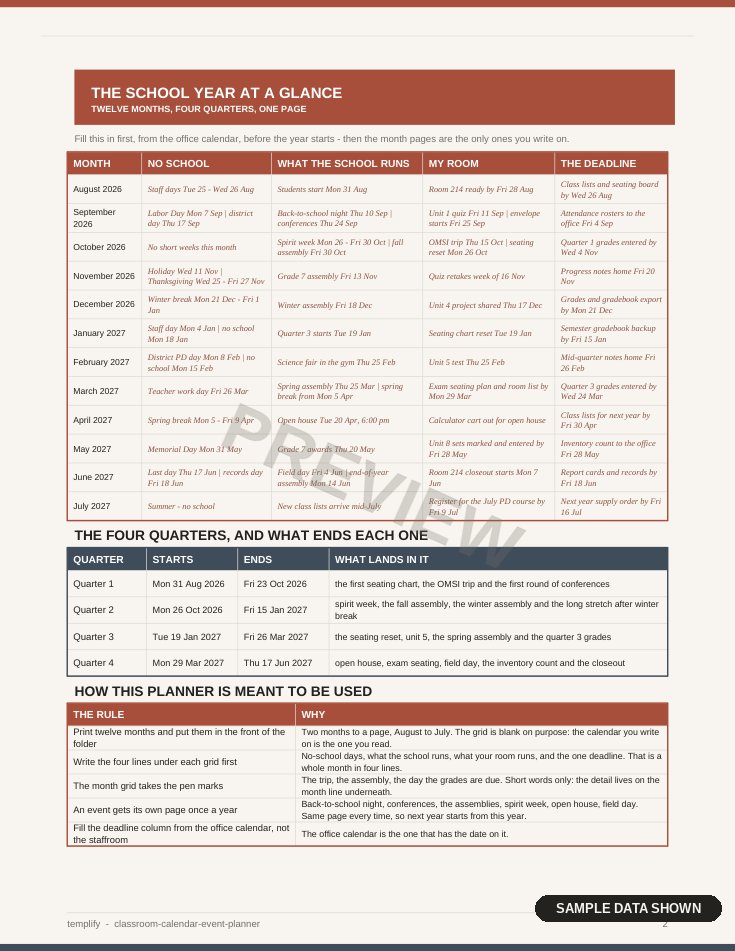
A ten-page calendar for the whole school year, August to July. The year at a glance puts twelve months on one page with the no-school days, what the school runs and what has to be handed in; after that each month gets its own block with the day numbers printed and nothing else written on them, so the year is filled in as it is confirmed rather than guessed at in August. An event plan page per event holds the date and time, who comes, who is on the door, what the event needs and what you will do differently, and a final page lists the events that come round every year whether anybody plans them or not - back-to-school night, conferences, spirit week, exams. Printed at home on US Letter; delivered by email as a PDF.
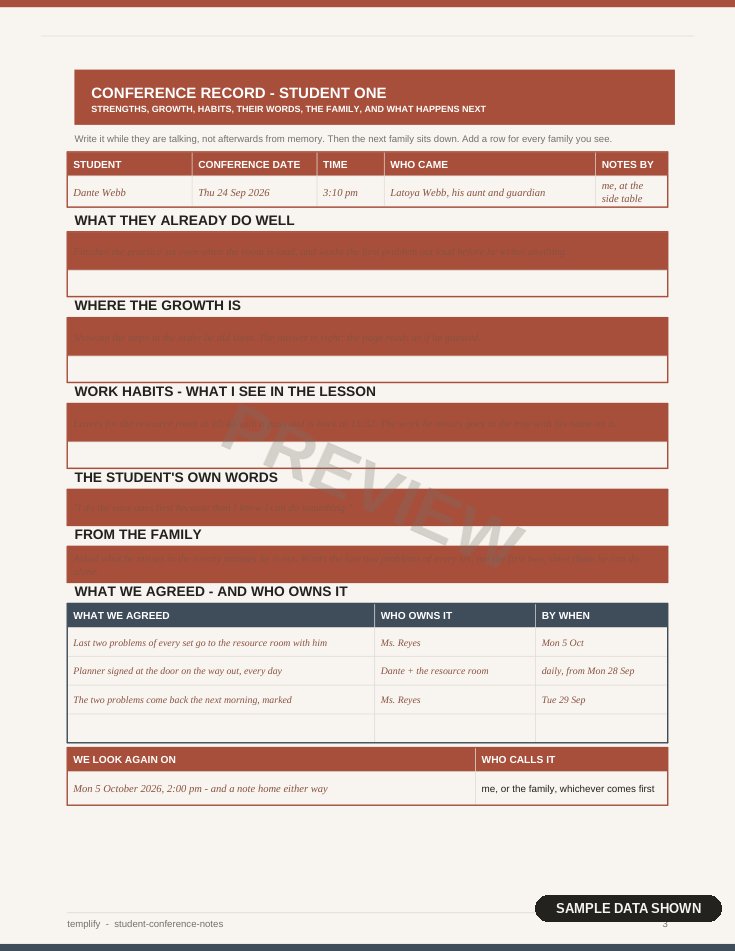
Six pages for conference week, written to be filled in while the family is still in the chair. Conference day at a glance runs the afternoon - student, time, who came, who took the notes - with the fifteen-minute running order and what to have on the table before anyone sits down. The record page takes one student at a time: strengths, growth areas, work habits, the student's own words, what the family said, and the agreed next steps with an owner and a date for each. A second record page is ready for the next family through the door, the term summary holds one line per student, and the last page is what you still owe after the conference - the promises with dates on them. Printed at home on US Letter; delivered by email as a PDF.
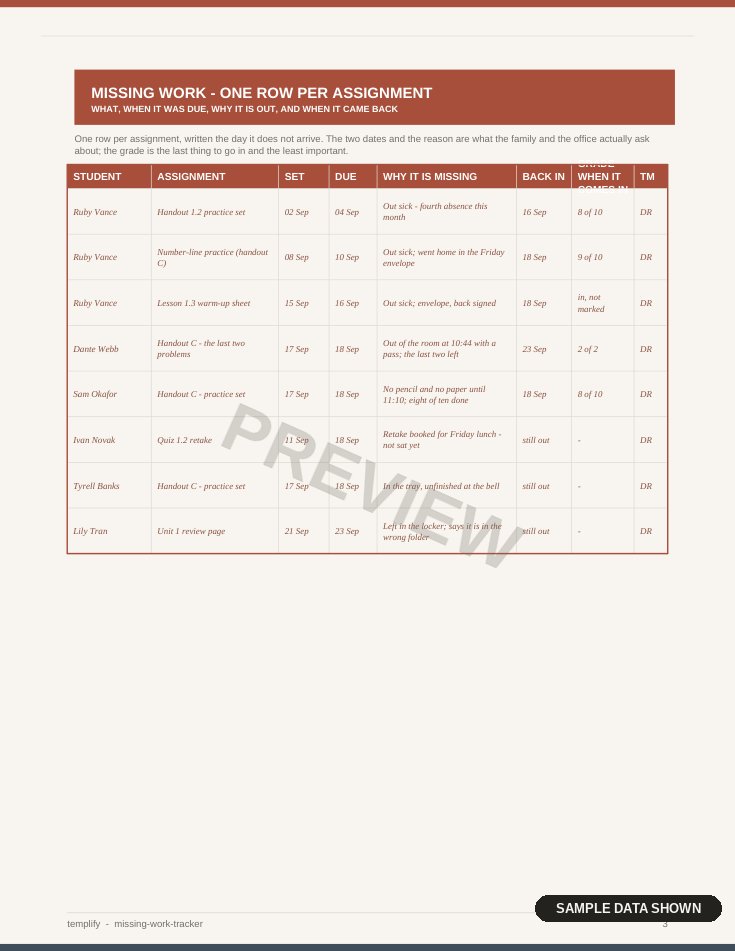
Six pages that turn a pile of late paper into a count you can defend. The class list is written once - twenty-four names in the order you take attendance - with the five rules for using the page. Missing work runs one row per assignment: the student, the assignment, the date it was set, the date it was due, why it is out, what date it came back, the grade when it comes in and your initials, with a second page of rows and what to do when the work finally arrives. The class summary gives one line per class - how many rows are out, the oldest item, who is first on the chase list - and the chase list names six students, six actions and a date next to each one. Nothing here is about punishment: it is about knowing what is out, how old it is, and who needs a conversation this week. Printed at home on US Letter; delivered by email as a PDF.
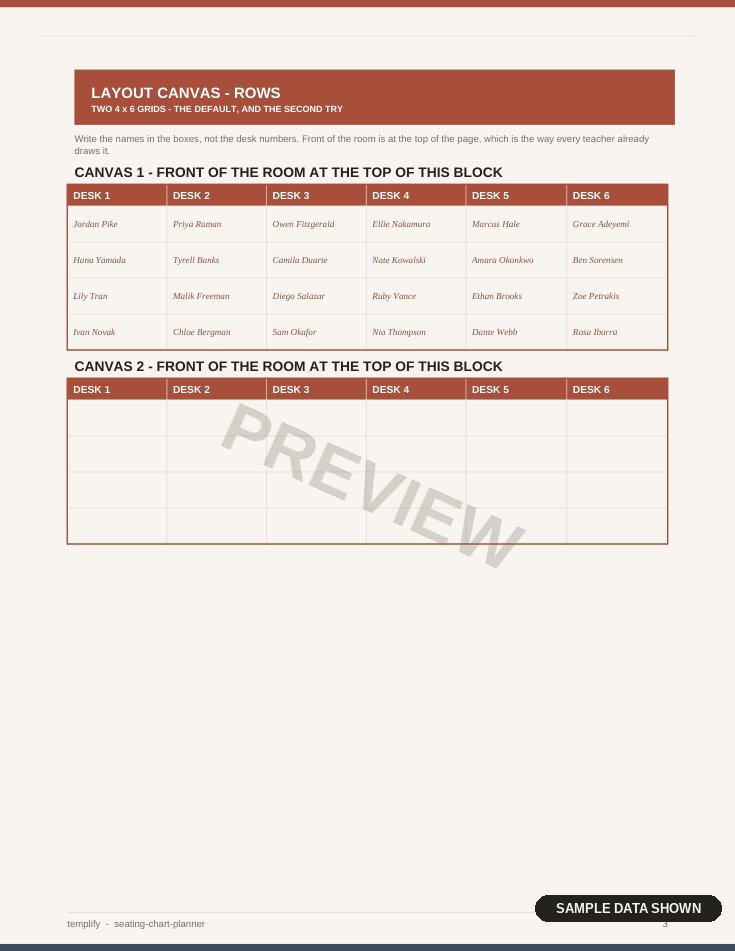
Six pages of layouts on paper, for the tool a teacher reaches for first and documents last. The seating key writes the class in once, twelve names to a column, with the one thing that drives each student's seat and how the desks are numbered, so every chart in the binder reads the same way - including to a substitute standing in the doorway. Then six canvases for the three layouts that matter: rows, clusters, and the U for discussion, debate and the hard conversations. Who sits next to whom closes it out with the mark key, the seats that move, the pairs to keep apart, the pairs that work, and a rollover page for each new term so the chart gets reviewed instead of inherited. Printed at home on US Letter; delivered by email as a PDF.
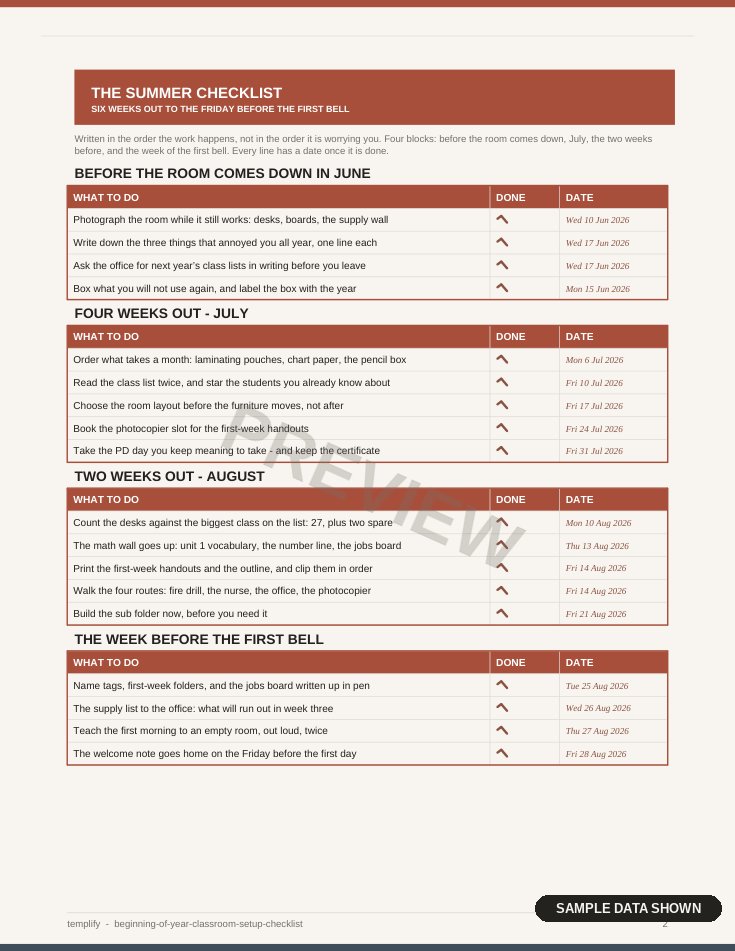
An eight-page checklist for building a classroom from an empty summer, in the order the work actually happens, with a DONE box and a date column on every row. The summer checklist runs four blocks from June to the Friday before the first bell. The room page works zone by zone - what lives in each zone, what has to be reachable without a student asking, the four bulletin boards and when each one changes. Furniture, desks and traffic covers the four arrangements and the lanes to walk before the first day, supplies track what to order and what is still needed with counts and dates, and sixteen routines and procedures are set out with how each one looks in your room. The last two pages cover the ten forms and how many copies of each, the technology setup, and the first five lesson slots with the welcome message. Printed at home on US Letter; delivered by email as a PDF.
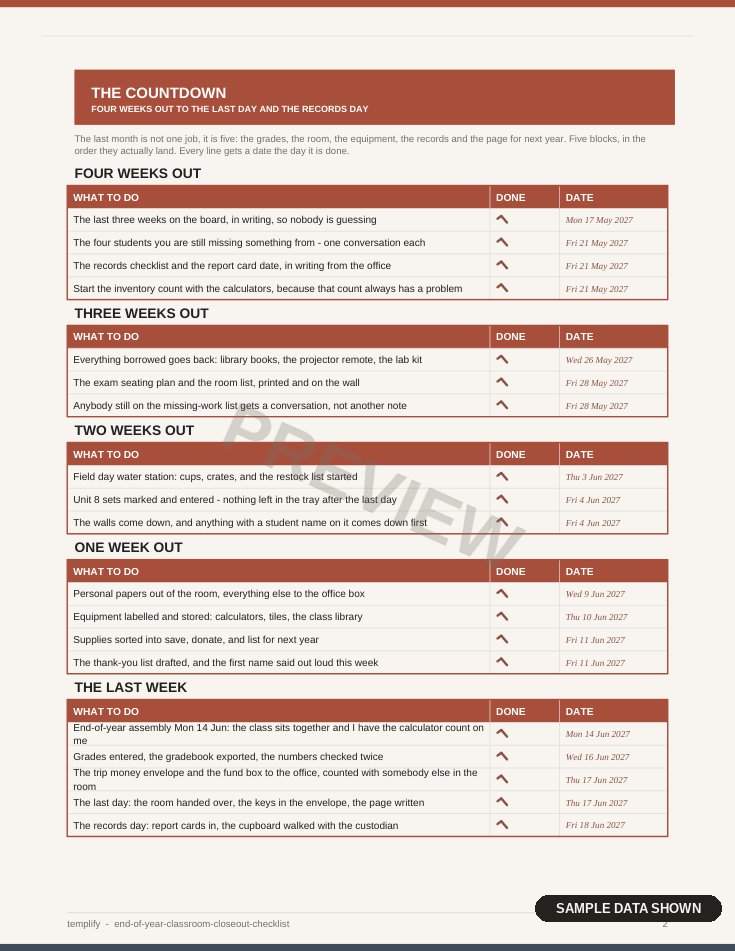
An eight-page checklist for the last four weeks of the school year, walked in the order the deadlines actually arrive, with a DONE box and a date on every row. The countdown runs five blocks from four weeks out to the records day - grades first, because the office is waiting, and the room second, because it can wait until the last afternoon. Grades, records and the money lists every submission with who wants it and the date you actually handed it over; room inventory and condition report runs ten lines of equipment with what was expected, what was found and what happens to it; and clean-up goes zone by zone through ten areas with who does what and when. Equipment storage and labelling, personal items, papers and student data, and the thank-you list and what I would change close the year out on paper instead of in your head. Printed at home on US Letter; delivered by email as a PDF.
 Teacher Resources